If your 7-iron came up short on a frosty morning, you didn’t imagine it. Golf ball flight in cold weather changes in ways that cost you distance on almost every club in your bag. This guide explains the science behind it, how many yards you can expect to lose, and what the Rules of Golf say about keeping your ball warm during a round.
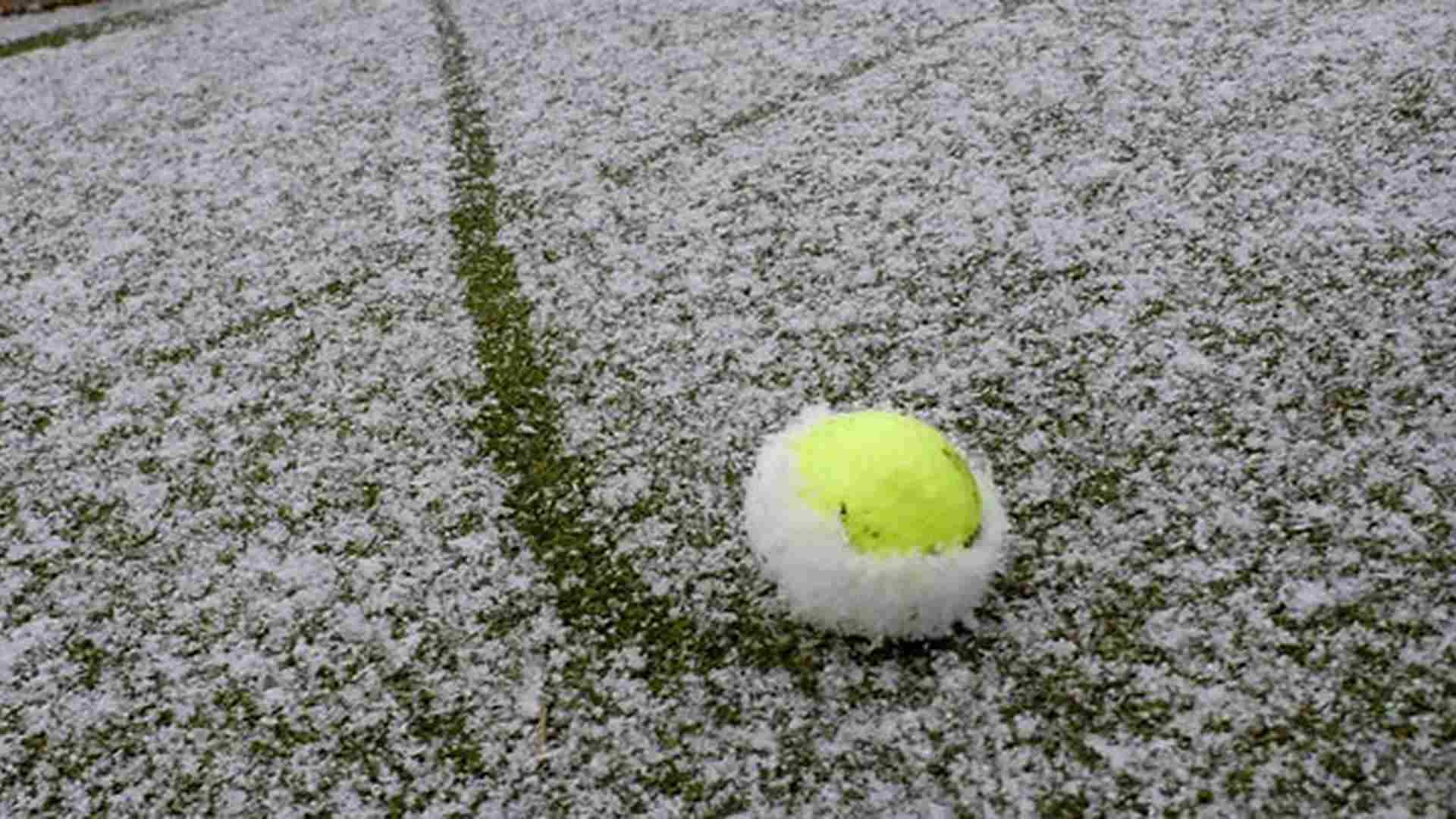
1. How cold weather changes golf ball flight
Two separate things happen when the temperature drops. The air your ball travels through gets colder, and the ball itself gets colder. They affect flight in slightly different ways, so it helps to look at each one on its own before adding them together.
1.1. Cold air creates more drag
Cold air is denser than warm air, so the ball has to push through more air molecules on its way to the target. Titleist explains that colder air increases both lift and drag on the ball, resulting in a slightly higher, shorter trajectory. In other words, the ball may climb a touch more than usual but runs out of energy sooner.
The effect of air temperature alone is fairly modest. Titleist’s rule of thumb is a distance loss of roughly 1.5% for every 20°F drop in temperature. On a 250-yard drive, that works out to about four yards between a 70°F day and a 50°F day. It sounds small, but it adds up quickly on approach shots where a few yards decide whether you find the green.
1.2. A cold ball comes off the face slower
The ball itself is the second problem. When a golf ball gets too cold, its materials lose some resiliency, which reduces its speed off the clubface. Less ball speed also means less spin and less height, so a cold ball tends to fly lower and shorter. This is why many golfers describe their winter shots as flat, even though cold air alone would push the ball’s flight slightly higher.
How much a cold ball costs you depends on how cold it really is. In MyGolfSpy’s testing with a driver swung at 100 mph, cold balls lost about 6 mph of ball speed and around 21 yards of carry, roughly 8.5%. That test used balls stored at near-freezing temperatures, so it reflects an extreme case, such as a sleeve left in the car overnight. Still, it shows that ball temperature can matter as much as air temperature.
A few other cold-weather factors also shorten your shots:
- Cold muscles and stiff joints slow your swing, and lower clubhead speed means lower ball speed.
- Thick layers of clothing restrict your shoulder turn and shorten your backswing.
- Firm or frozen ground adds extra bounce and roll, which helps off the tee but makes approach shots harder to stop.
- Winter wind is often stronger and can exaggerate any loss of carry.
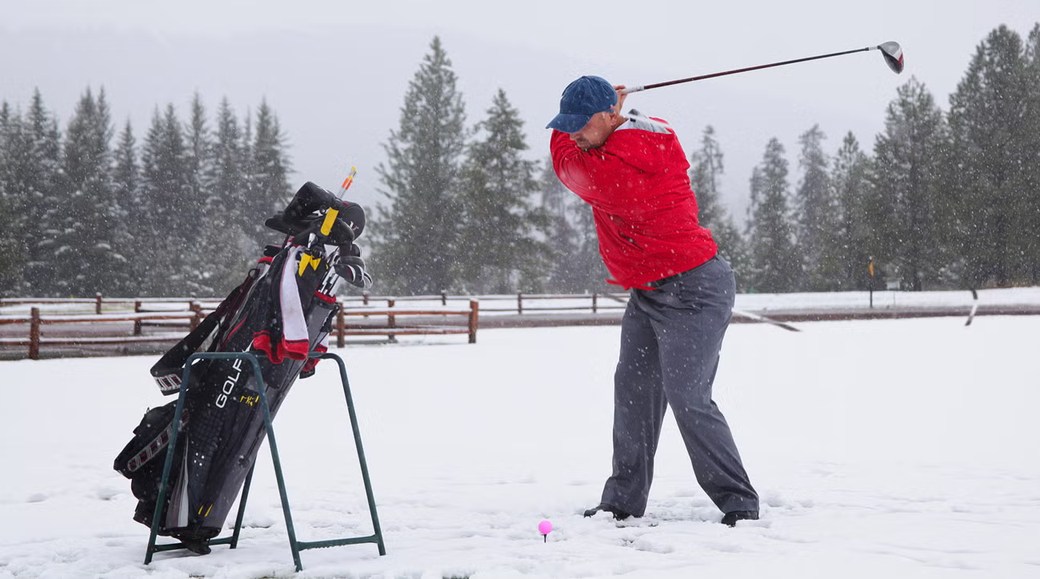
2. How much distance do you lose in cold weather?
There is no single number that fits every golfer, because the loss depends on your swing speed, the club you’re hitting, and how warm your ball is. The figure quoted most often comes from launch monitor testing. GOLF Top 100 instructor Andrew Rice found that golfers lose about two yards with each club for every 10-degree drop below 75°F, based on TrackMan data. With the pitching wedge, the loss was smaller, at around 1.3 yards per 10 degrees.
The table below applies that two-yard estimate to a 7-iron that normally carries 150 yards at 75°F. Treat these numbers as a starting point rather than an exact chart, and check your own distances on a launch monitor or at the range when the weather turns cold.
| Air temperature | Estimated 7-iron carry | Difference |
|---|---|---|
| 75°F (24°C) | 150 yards | – |
| 65°F (18°C) | 148 yards | -2 yards |
| 55°F (13°C) | 146 yards | -4 yards |
| 45°F (7°C) | 144 yards | -6 yards |
| 35°F (2°C) | 142 yards | -8 yards |
These estimates assume your ball has not been sitting in freezing conditions. If it has, expect the loss to be larger, as the MyGolfSpy results above suggest.
3. Can you warm your golf balls? What the Rules of Golf say
Since a warm ball flies farther, it’s tempting to heat it up during a round. This is where many golfers get into trouble. Rule 4.2a(2) says you must not make a stroke at a ball whose performance has been deliberately changed, and heating the ball is one of the examples given. The penalty for playing such a ball is disqualification, so the line between what is allowed and what isn’t really matters.
3.1. What is allowed
You still have several legal ways to keep your ball close to room temperature:
- Warming balls with any device before your round starts. Artificially warming your balls before the round is not a breach of the rules.
- Carrying a ball in your pocket. Natural body heat is not considered an artificial device, so this is allowed throughout the round.
- Using hand warmers to keep your hands warm, as long as your golf balls stay away from them.
- Switching to a different ball between holes. You can start each hole with any conforming ball, which makes rotating two balls a simple and legal option.
3.2. What can get you disqualified
The problem starts when you use an artificial heat source on your ball during the round. This includes keeping a ball in the same pocket as a hand warmer, using a battery-powered ball warmer, or holding a ball in front of a cart heater. According to GOLF’s Rules Guy, making a stroke with a ball after it has been warmed this way could lead to disqualification under Rule 4.2a, with the word “could” used because it may be debatable whether the heating was deliberate.
If you realize mid-hole that a ball was warmed by mistake, there is a way out. The Rules Guy notes you could replace it with another ball for the general penalty, which is better than disqualification, and if the warming happened between holes, you could swap it without penalty. Some websites claim that heating a ball by any method between holes is fine. The safer approach is simple: once your round begins, keep all artificial heat away from your golf balls.
4. How to adjust your game in cold weather
Knowing why your shots fall short is only useful if you change how you play. These adjustments help most golfers score better when the temperature drops:
- Take more club. On very cold days, one extra club on approach shots is a sensible starting point, especially if you tend to come up short.
- Rotate two balls. Titleist suggests keeping the idle ball in a warm pocket so its temperature stays consistent. Swap them between holes.
- Store your balls indoors. Avoid leaving them in extreme environments such as a car trunk in freezing conditions, particularly the night before a round.
- Warm up your body properly. A longer warm-up and thin, flexible layers help you keep your normal swing speed.
- Play for extra roll. Land the ball shorter than usual and let firm ground carry it forward.
Ball choice is more debatable. Titleist calls switching to a lower-compression ball in cold weather a common misconception, and argues it is unnecessary if your balls are kept near room temperature. Some golfers still prefer a softer ball for its feel in winter. If you’re curious, test both on the course rather than changing based on general advice.
Most of the yards you lose in winter come from two sources: denser air and a colder ball. Understanding golf ball flight in cold weather helps you club up with confidence and keep your ball warm the legal way, using body heat and pre-round warming rather than hand warmers. If you’re unsure whether something you do on the course breaks a rule, ask Golficial for a quick answer or download the Golficial app to keep the rules close at hand.