Not every bad lie earns a free drop in golf. The Rules of Golf only give free relief when something abnormal, such as ground under repair, a cart path, or temporary water, interferes with your play. This guide from Golficial explains when you can drop without penalty, when you cannot, and how the rules apply to a real case of a ball lost in thick leaves.

|
Key takeaways:
|
1. What is a free drop in golf?
A free drop, officially called free relief, lets you lift your ball and drop it somewhere else without adding a penalty stroke. This is different from penalty relief, such as declaring an unplayable lie, where you accept one stroke to get out of trouble. Free relief exists because some conditions are not meant to be part of the challenge of the course.
The procedure is similar in most cases. First, find the nearest point of complete relief, which is the closest spot where the condition no longer interferes, no nearer the hole. Then drop a ball from knee height so that it lands and comes to rest within one club-length of that point.
The principle behind all of this is simple: the Rules protect you from abnormal course conditions, not from bad luck. A ball behind a tree or in thick rough is the result of a poor shot, so you have to deal with it. A ball on a cart path or in a rain puddle is a different matter.
2. When the Rules allow a free drop in golf
Most free relief situations are covered by Rule 16.1 on abnormal course conditions, with others in Rules 13.1 and 16.3. In general, the condition must touch your ball or get in the way of your stance or the area of your intended swing.
2.1. When do you get a free drop in golf?
There are six common situations where you can take a free drop:
- Ground under repair (GUR): areas the Committee has marked or declared as needing protection, usually with white lines or stakes. Examples include newly seeded turf, excavations and material piled for removal.
- Immovable obstructions: artificial objects that cannot easily be moved, such as cart paths, sprinkler heads, drain covers and fixed benches.
- Temporary water: puddles or standing water that is visible before or after you take your stance, without pressing down hard with your feet. Dew and frost do not count.
- Animal holes: holes dug by animals such as rabbits or moles, plus the material they push out. Holes made by worms and insects are excluded.
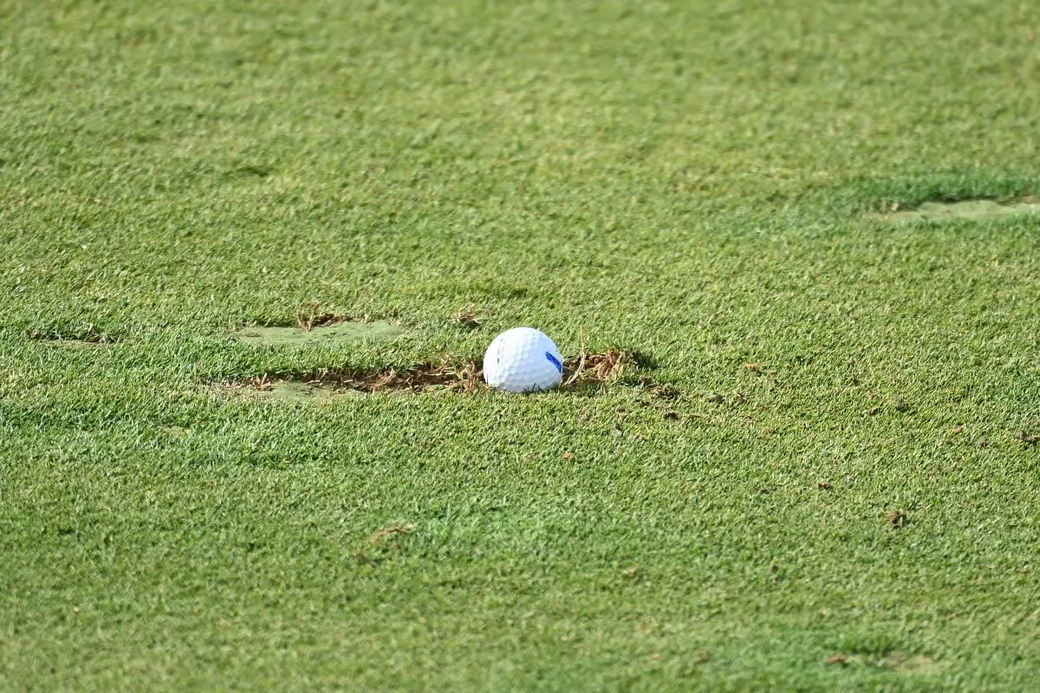
- An embedded ball: a ball sitting in its own pitch mark in the general area. You drop within one club-length of the spot right behind the ball.
- A wrong green or no play zone: if your ball lies on the putting green of another hole, or in an area marked as a no play zone, you must take relief.
There are some limits: You get no relief if the condition only affects your line of play (except on the putting green), or if interference exists only because you chose a clearly unreasonable stroke. Free relief from abnormal course conditions is also not available when your ball is in a penalty area.
2.2. When do you NOT get a free drop?
There are five common situations where golfers expect a free drop but are not entitled to one:
- Deep rough: long grass is a natural part of the course, however difficult the shot may be.
- Trees and bushes: a trunk blocking your backswing or branches limiting your follow-through do not entitle you to relief.
- Natural leaves: leaves are loose impediments, not abnormal conditions. You can remove them, but you cannot drop away from them unless the area is GUR or a Local Rule applies.
- A bad lie: a bare patch, an awkward slope or a ball sitting in a divot is simply bad luck, unless the course has declared the area as GUR.
- An obstruction that only blocks your line: if a sign or sprinkler box sits between your ball and the hole but does not affect your lie, stance or swing, you get no relief.
|
Note: In each case, you can play the ball as it lies or take unplayable ball relief under Rule 19 for one penalty stroke. This gives you three options: replay from the previous spot, drop back on a line from the hole through your ball, or drop within two club-lengths of where the ball lies. |
3. Real case from Golficial: Ball lost in thick leaves
Golficial is a Q&A platform for golf rules, where players describe a situation and receive a rules-based answer from its AI Rules Official. One user asked a question that comes up every autumn: “My ball is lost in thick, dry leaves. Am I entitled to free relief?“
3.1. How the system narrowed the question
Instead of giving a general answer, the system first asked two follow-up questions, because the ruling depends on both. Was the ball found within the three-minute search time? Were the leaves in an area marked as GUR, or covered by a Local Rule for leaf accumulations? The player confirmed that the ball was found, and that the leaves were just ordinary loose leaves.
3.2. The ruling: No free relief
Since the ball was found among ordinary loose impediments, free relief was not available. The player had two options:
- Play the ball as it lies after carefully removing loose leaves, with no penalty (Rule 15.1).
- Take unplayable ball relief if the shot is too difficult, with one penalty stroke (Rule 19).
The system also gave a practical warning. If the ball moves while you are removing leaves, you must replace it and add one penalty stroke, unless the ball was on the putting green. If the ball is sitting down in the leaves, note its exact position before clearing anything, so you can replace it accurately if it moves.
3.3. How the ruling changes with different facts
If the ball had not been found within three minutes, it would be a lost ball under Rule 18.2. The player would return to the previous spot and add one penalty stroke, unless they had already played a provisional ball. However, if the leaves were in declared GUR and it was known or virtually certain the ball was there, the player could take free relief under Rule 16.1, even without finding the ball.

4. Frequently asked questions
1. Can I remove leaves around my ball?
Answer: Yes. Leaves are loose impediments, so you can remove them anywhere on the course without penalty, including in bunkers and penalty areas. The risk is moving your ball, which costs one penalty stroke unless the ball is on the putting green. If you accidentally move the ball while searching for it, there is no penalty, but you must replace it.
2. Is a free drop from a cart path always a better lie?
Answer: Not necessarily. The nearest point of complete relief is based on distance, not on which side gives you a better shot. It may put you in rough or behind a tree, and you must accept that. If you think the new lie will be worse, you can choose to play the ball from the path instead.
3. Can I take a free drop if I think my ball is in GUR but cannot find it?
Answer: Only if it is known or virtually certain that the ball came to rest in the GUR, for example when several players saw it land in a small, clearly marked area. In that case, you take relief from the estimated point where the ball last crossed the edge of the area. If there is real doubt, the lost ball rule applies.
4. What is the difference between a free drop and an unplayable lie?
Answer: A free drop is granted by the Rules for abnormal conditions and costs nothing. An unplayable lie is your own choice when a shot is too difficult, and it always costs one penalty stroke. You can declare your ball unplayable anywhere except in a penalty area.
5. Where can I find the Local Rules for a course?
Answer: Check the scorecard, the notice board near the first tee, or ask the starter. In competitions, Local Rules are often included in the terms of the competition. This matters most in autumn and after heavy rain, when courses may introduce temporary relief for leaves or wet areas.
A free drop in golf is only available when an abnormal condition, such as ground under repair, an immovable obstruction or temporary water, interferes with your ball, stance or swing. Natural features like rough, trees and leaves are part of the game and never give you free relief on their own. When in doubt, check the Local Rules before your round and confirm the correct procedure before lifting your ball.
>>> Not sure whether you can take relief, or how to proceed in an unusual situation? Describe it on Golficial. The AI Rules Official will ask a few quick questions, then give you a rules-based ruling with your options and penalty strokes laid out clearly.