One of the most common questions golfers ask is when you can hit a provisional ball in golf. Many players know that a provisional ball can save time, but they are less certain about when it is actually allowed or what happens if the original ball is eventually found. Understanding this rule can help you avoid unnecessary penalties, speed up play, and make the right decision when uncertainty arises on the course.
1. What is a provisional ball?
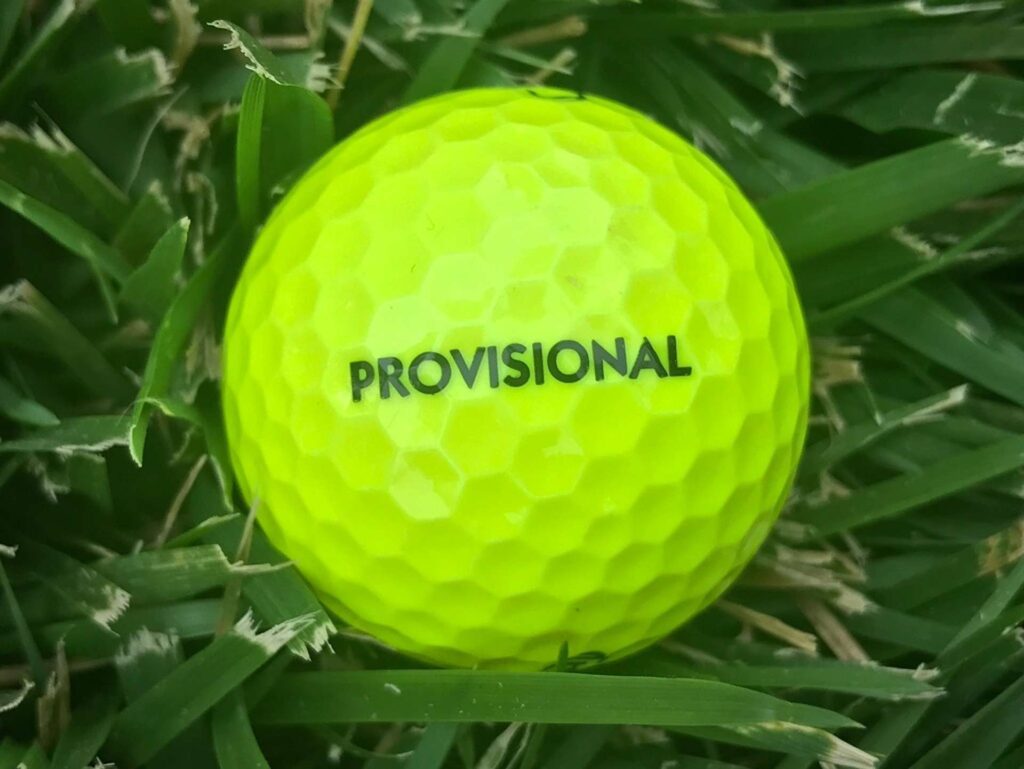
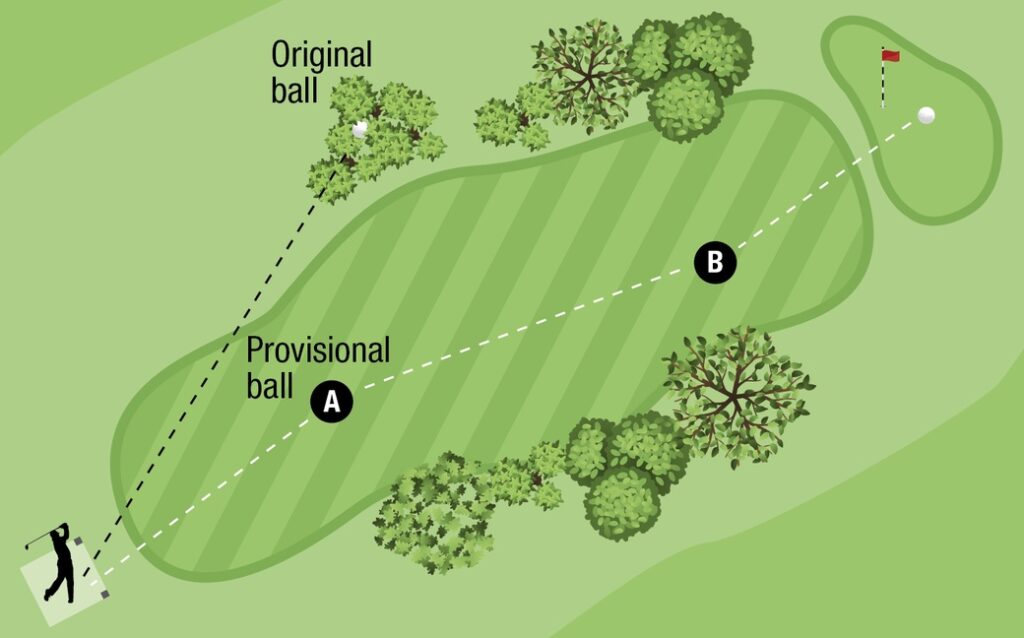
A provisional ball is an extra ball played before you leave the spot of your previous stroke because you believe your original ball may be lost outside a penalty area or may be out of bounds. Its purpose is simple: to save time.
Without this rule, every player whose ball might be lost would have to walk forward, search for the ball, and then return to the previous spot if it could not be found. On a busy course, this would significantly slow down the pace of play.
Instead, the Rules of Golf allow you to play another ball immediately so that, if the original ball cannot be played, you can continue without making the long walk back.
Why does this rule matter? The provisional ball rule is designed to improve efficiency without giving players an unfair advantage. It is important to understand that a provisional ball is not a “backup shot” that lets you choose the better result later. It only exists in case your original ball is lost outside a penalty area or is out of bounds.
If the original ball remains in play, the provisional ball has no further role and must be abandoned.
2. When can you hit a provisional ball?
2.1. The two situations where a provisional ball is allowed
According to Rule 18, you may play a provisional ball only when there is a reasonable possibility that your original ball is:
- Lost outside a penalty area.
- Out of bounds.
This decision should be made before you walk forward to search for the original ball. For example, hitting a drive into thick trees, deep rough, heavy bushes, or towards a boundary fence are situations where playing a provisional ball is often a good idea. Since there is a genuine chance that the original ball cannot be played, the provisional helps prevent unnecessary delays.
2.2. When should you announce a provisional ball?
Before making the next stroke, you should clearly tell your fellow players that you are playing a provisional ball. A simple statement such as “I’m playing a provisional” is sufficient.
This announcement is important because, without it, the next ball you play from the previous spot could automatically become your new ball under stroke-and-distance relief instead of being treated as a provisional ball. Many amateur golfers forget this step, creating confusion later if the original ball is found.
3. When can you NOT hit a provisional ball?
3.1. A likely penalty area is not enough
One of the biggest misunderstandings involves penalty areas. If you know or are virtually certain that your ball came to rest in a penalty area, you are not allowed to play a provisional ball. Instead, you must either:
- play the original ball if it is found and playable, or
- take the available penalty relief under the Rules.
A provisional ball is only intended for situations involving a potentially lost ball outside a penalty area or an out-of-bounds ball.
3.2. When the original ball has already been found
Once your original ball has been found and identified within the allowed search time, there is no reason to play a provisional ball. The original remains the ball in play unless another Rule requires relief or allows another option.
Similarly, if there is no realistic possibility that the ball is lost or out of bounds, playing a provisional ball is unnecessary and does not comply with the intended use of the Rule.
4. What happens after you hit a provisional ball?
There are 3 cases:
- If the original ball is found within three minutes: The Rules allow three minutes to search for the original ball. If it is found within that time and is in bounds, the original ball remains the ball in play. The provisional ball must be abandoned, even if it finished in a much better position. Many golfers find this frustrating, but the Rules do not allow players to choose whichever ball produces the better outcome.
- If the original ball is lost: If the original ball is not found within the three-minute search period, it becomes a lost ball. Provided that the provisional ball was played correctly, it automatically becomes the ball in play. You continue with the provisional under stroke-and-distance relief, which includes a one-stroke penalty.
- If the original ball is out of bounds: The same principle applies if the original ball is found but is out of bounds. Since an out-of-bounds ball cannot be played, the provisional ball immediately becomes the ball in play, again with a one-stroke penalty under stroke and distance.
5. Common mistakes golfers make
- Thinking the better ball can be chosen: This is probably the most common misconception. Some players believe they can simply choose the provisional ball if it finishes closer to the hole or in a better lie. That is never the purpose of a provisional ball. If the original ball is found in bounds within the search time, it remains the only ball that may be played.
- Forgetting to announce the provisional: Another frequent mistake is hitting another ball without saying it is provisional. Without a clear announcement, that next ball may be treated as the player’s new ball under stroke and distance rather than as a provisional ball. This can completely change the ruling later.
- Playing a provisional for a likely penalty area: Some golfers automatically play a provisional whenever they lose sight of the ball. However, if the ball most likely entered a penalty area, a provisional ball is not permitted. Understanding this distinction helps avoid unnecessary confusion during the round.
6. Real case from Golficial
1 – Situation: A golfer asked Golficial: I hit a provisional ball, and it finished in a much better position than my original ball. Can I choose to play the provisional instead? This situation is surprisingly common, especially after a poor tee shot followed by an excellent provisional.
2 – AI analysis: The answer is NO. The Rules do not allow a player to choose the provisional ball simply because it produced a better result.
The first step is always to search for the original ball for up to three minutes. If the original ball is found within the search time and is in bounds, it remains the ball in play. The provisional ball must be picked up and ignored, regardless of how well it was played. Only if the original ball is lost outside a penalty area or is out of bounds does the provisional become the ball in play.
In other words, the quality of the provisional shot is irrelevant. The status of the original ball determines which ball must be played.
3 – Step-by-step ruling: The correct procedure is:
- Announce that you are playing a provisional ball.
- Play the provisional before walking forward.
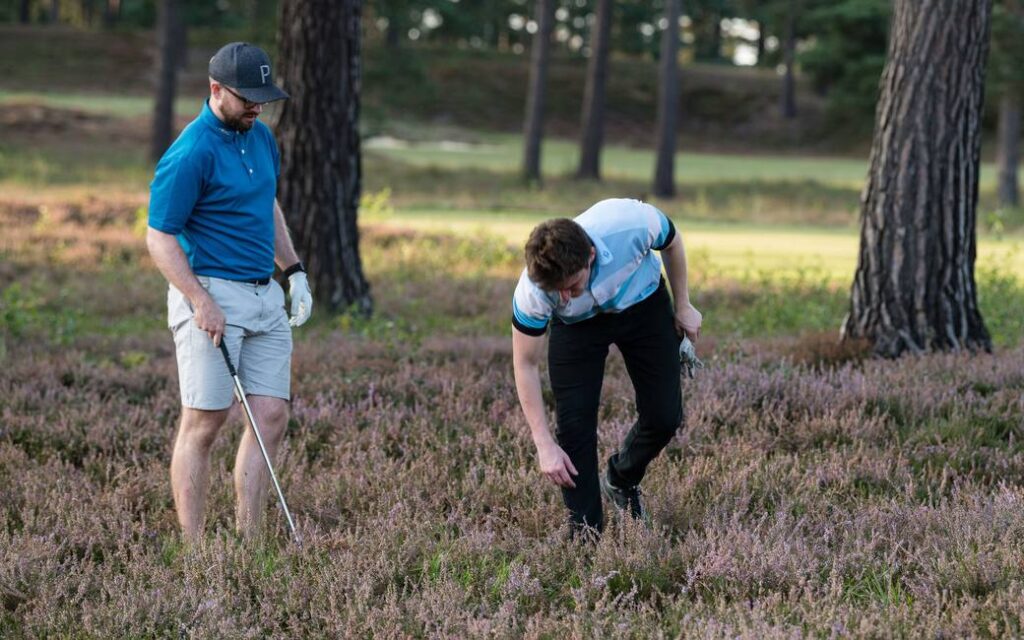
- Search for the original ball for up to three minutes.
- If the original ball is found in bounds, continue with the original ball.
- If the original ball is lost or out of bounds, the provisional automatically becomes the ball in play with a one-stroke penalty.
Following these steps ensures that the round continues smoothly while remaining consistent with the Rules of Golf.
Related question: How many penalty strokes if the original ball is lost? Another common question from Golficial users concerns the penalty. If your original ball is lost outside a penalty area and you have already played a provisional ball correctly, the provisional becomes the ball in play with a one-stroke penalty.
If you did not play a provisional before leaving the previous spot, you must return to where the previous stroke was made and play another ball under stroke-and-distance relief, which also carries a one-stroke penalty.
Although the penalty is the same, playing a provisional often saves considerable time because you avoid walking back to replay the shot.
Understanding when you can hit a provisional ball in golf helps you make quicker decisions and avoid unnecessary penalties during a round. A provisional ball is only allowed when the original ball may be lost outside a penalty area or may be out of bounds. If the original ball is found in bounds within three minutes, you must continue with that ball, even if the provisional finished in a much better position. If the original is lost or out of bounds, the provisional becomes the ball in play under stroke-and-distance relief with a one-stroke penalty. Knowing these basic principles will help you apply Rule 18 correctly and keep play moving for everyone on the course.
>>> Read more about real case via Golficial community!